

Why Are Mylar Bags The Best For Food Preservation?
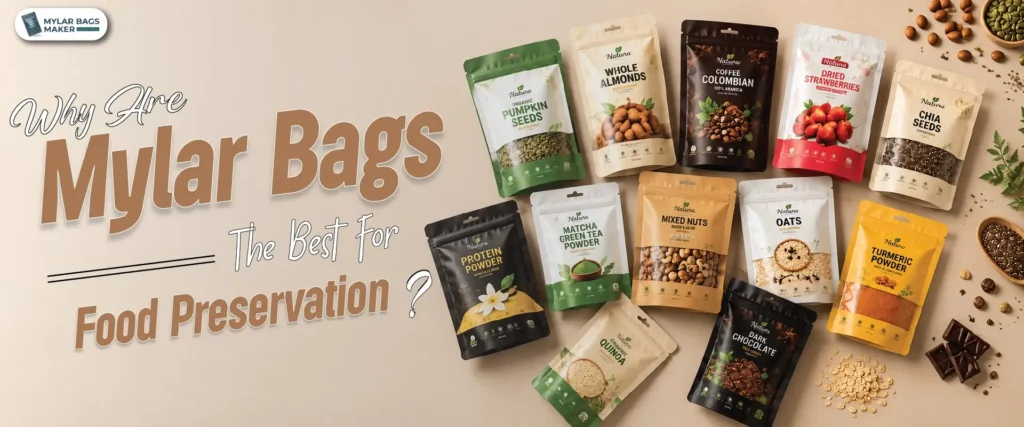
If you are running a food business, then you must have been facing challenges related to the packaging. Brands face challenges to choose a packaging that is affordable and food-grade. They need preservation by avoiding contact with microbes and oxygen. It is quite arduous to find all these features in one packaging. Nonetheless, mylar bags have resolved these issues. These bags have all the required features for food packaging and are also quite affordable. The durable materials and proper sealing techniques of the bags allow brands to shield their products from oxygen. This eventually increases the shelf life and retains the freshness of your product.
What Are Mylar Bags?
Mylar bags are high-barrier custom pouches that are manufactured from multiple layers of materials. Polyester films and other protective materials are combined to create packaging that can protect the product for an extended period. The word “Mylar” is a trade name used for biaxially oriented polyethene terephthalate. Custom printed Mylar bags are food-grade and can be used at domestic as well as at commercial levels. These bags are resistant to:
- Oxygen
- UV light
- Water
- Odours
Why Mylar Bags Are Ideal for Food Storage
Food products need protection from moisture and oxygen. They also need to be protected from bacterial contamination and debris. If food is exposed to these external factors, it can become bad and unfit for human consumption. Due to this, the shelf life of food items reduces significantly. For instance:
- Oxygen causes oxidation
- Moisture leads to mould growth
- Sunlight degrades nutrients
- Air exposure reduces the flavour and aroma
All these factors can be kept at bay from the food items with the use of food-grade Mylar bags in the UK. A UK-based business that distributes food across varying climates and storage facilities, these bags help in the maintenance of food quality. The key advantages that you can get from these resealable Mylar bags are as follows:
- Excellent oxygen resistance
- Superior moisture protection
- Light-blocking properties
- Odour containment
- Reduced risk of contamination
- Longer food shelf life
- Strong puncture resistance
- Heat-sealable construction
- Lightweight transportation
- Space-efficient storage
Mylar Bag And Food Preservation
The preservation of food relies on controlling environmental conditions surrounding the product. Mylar bags minimise the exposure of food elements to undesirable factors and reduce the degradation rate. There are several processes involved in the protection by Mylar food storage bags, such as:
Oxygen Barrier
One of the major deterioration factors for edible products is oxygen. It reacts with all the essential elements and nutrients in the food and reduces the quality. Such as:
- Oxygen causes rancidity of fats
- Oxidises colours and fades them
- Degrades vitamins and weakens the flavour
The presence of aluminium in the mylar bags reduces oxygen transmission and slows oxidation.
Moisture Protection
Polyethene sheets in the mylar pouches prevent moisture from entering or leaving the packaging. This is because moisture is the leading cause of mould and bacterial growth.
Light Protection
UV light damages food products and degrades nutrients to oils and natural pigments. The presence of metallic layers in the bags blocks light penetration and protects the food quality during storage.
Aroma Retention
There are several food items that have their taste due to their classic aroma. Such as:
- Coffee beans
- Tea leaves
- Herbs
- Spices
Mylar bags for dry food are also essential to prevent oxidation. Dry fruits have a large amount of saturated fats that can go rancid due to oxygen and moisture.
Materials for Food-Grade Mylar Bags
There are multiple materials used in the manufacturing of mylar bags. This use of multiple materials creates exceptional barriers and performance. Personally designed mylar bags are designed with the following raw materials:
- Polyester or BoPET
- Aluminium foil
- Polyethylene
- Nylon (optional)
- Food-grade sealant layer
Each material layer has its specific properties that make mylars a perfect packaging pouch as a whole. The polyester layer gives strength and dimensional stability to the pouches. Aluminium is used for oxygen blockage, and polyethene gives a food-safe inner layer. Commercially grade bags also have some additional layers that reinforce the material strength and enhance puncture resistance during shipping and warehouse handling.
Mylar Pouches and Bag Thickness
The thickness of custom Mylar pouches is one of the most important things that you have to consider at the time of selecting bags for your brand. Due to extremely thin layers, the thickness of Mylar bags is measured in mils, which are one thousandth of an inch. Some of the recommended thicknesses of Mylar pouches are as follows:
| Thickness | Suitable For |
| 3.5 mil | Short-term storage |
| 5 mil | Standard dry food storage |
| 7 mil | Long-term commercial storage |
| 10 mil | Heavy-duty industrial applications |
Thicker bags generally offer better puncture resistance with improved durability. You can get stronger barrier protection and longer shelf life for your edibles. For UK base manufactures 5 to 7 mils is the best option. This is because this size provides a balance between protection and cost.
Are Mylar Bags Safe For Food Storage?
All food items can be packed in Mylar bags. This is because these bags are excellent for food items that have low moisture content. The suitable food items are as follows:
- Whole grains
- Rice
- Pasta
- Beans
- Lentils
- Flour
- Sugar
- Salt
- Coffee beans
- Tea leaves
- Herbs and spices
- Powdered milk
- Freeze-dried foods
- Dehydrated vegetables
- Pet food
Foods That Should Not Be Stored in Mylar Bags
There are many food items that cannot be packed in mylar bags. This is because these food items need refrigeration or freezing. Vacuum packaging or modified atmosphere packaging can also be required for several food items that cannot be provided via mylar bags. These foods have a different moisture and oil content that is not suitable for food pouches. The examples include the following:
- Fresh vegetables
- Fresh fruit
- Soft cheese
- Fresh meat
- Cooked meals
- High-moisture bakery products
- Fresh dairy products
- Foods containing excessive oils
Why Oxygen Absorbers Matter
Oxygen absorbers are small packs that contain iron powder. This powder chemically removes trapped oxygen inside the sealed packages and is essential for long-term food storage applications. Oxygen absorbers begin working immediately after they are exposed to air. So make sure you are using them immediately in Mylar bags for long term food storage with as little air exposure as you can. The selection of oxygen absorbers is done based on the bag volume and the amount of empty air inside the package. Oxygen absorbers help via:
- Reduce oxidation
- Prevent insect activity
- Slow nutrient degradation
- Preserve flavour
- Extend shelf life
UK Food Storage Considerations
As you are running your food business in the UK, you have to consider storage requirements alongside the packaging pouches. Warehouses and retail stockrooms can experience different seasonal fluctuations in temperature and humidity. So you must store the food bags in cool and dry places. A clean environment is also an essential factor for the maintenance of food shelf life. Besides this, make sure that your custom-printed food pouches fully comply with UK food-contact requirements. For this, you have to source your packaging from reputable manufacturers. Such manufacturers will give you food-grade documentation and quality assurance.
How to Store Food in Mylar Bags Properly
The selection of durable bags works only when you have properly used them. Every premium and food-grade mylar bag can fail if your packaging process is poor. There are several factors that you can keep in mind to preserve food freshness and maintain the nutritional value of your food. Below are some of the steps that brands follow to maximise shelf life:
- Select the right mylar bag
- Prepare the food
- Fill the bag correctly
- Add oxygen absorbers
- Heat seal the bag
- Store under suitable conditions
Brands that want to preserve the quality of their food for a long duration need to select packaging with proper heat sealing. Even if there is a small opening in the bags, the quality of your food can never be retained for the desired duration. This is because the unsealed area will allow moisture and oxygen exchange and reduce the effectiveness of packaging. For the best sealing, you can use the following tools or methods:
- Impulse heat sealer
- Constant heat sealer
- Household iron
- Hair straightener
How Long Does Food Last in Mylar Bags?
The preservation of food shelf life depends on several factors that include food type and moisture content. The storage temperature and packaging quality with oxygen control are also important factors that impact the shelf life of the food items. Mylar bags do not increase the shelf life themselves, but they retain the shelf life by providing optimal packaging conditions. Some of the approximate storage expectations and the relevant shelf life are listed in the table below. You can achieve these approximate shelf lives only when the surrounding conditions are perfect and the bags are sealed properly.
| Food Product | Estimated Shelf Life |
| White rice | 20-30 years |
| Dried beans | 20-30 years |
| Pasta | 20-30 years |
| Wheat berries | 25-30 years |
| Oats | 20-30 years |
| Powdered milk | 10-15 years |
| Freeze-dried meals | Up to 25 years |
| Herbs and spices | 2-5 years |
| Coffee beans | 1-5 years |
| Dehydrated vegetables | 10-20 years |
Common Mistakes to Avoid
For proper protection of the food items, you must use bags in proper condition. This is because Mylar bags do not compensate for poor storage conditions. If you avoid certain mistakes, you can protect the food quality and reduce unnecessary product loss.
- Packing high-moisture foods
- Choosing thin bags
- Poor heat sealing
- Incorrect oxygen absorber size
- Storing in warm areas
- Ignoring storage hygiene
Mylar Bags vs Vacuum Sealing
Several UK-based businesses compare Food-grade Mylar bags with vacuum-sealed packaging. Although both methods preserve the food, both of them serve different purposes. Such as:
| Feature | Mylar Bags | Vacuum Bags |
| Oxygen barrier | Excellent | Moderate |
| Light protection | Excellent | Limited |
| Moisture resistance | Excellent | Good |
| Long-term storage | Outstanding | Moderate |
| Puncture resistance | High | Moderate |
| Heat sealing | Yes | Yes |
| Suitable for dry foods | Excellent | Excellent |
| Suitable for freezer storage | Good | Excellent |
Final Thoughts
Mylar bags are one of the most reliable packaging pouches that can be used for the preservation of food. These bags protect the packed items from oxygen and light. Mylar bags also reduce moisture exchange and prevent contamination. The multilayer material of heat seal Mylar bags must be combined with proper heat sealing and an appropriate external environment. If you achieve all the required conditions for food storage, you can extend the shelf life of your food for decades. You can get a high-end mylar bag with all the appropriate features by opting for the services of Mylar Bags Makers in the UK. Contact us and get the most exclusive packaging services at wholesale rates in the USA.