

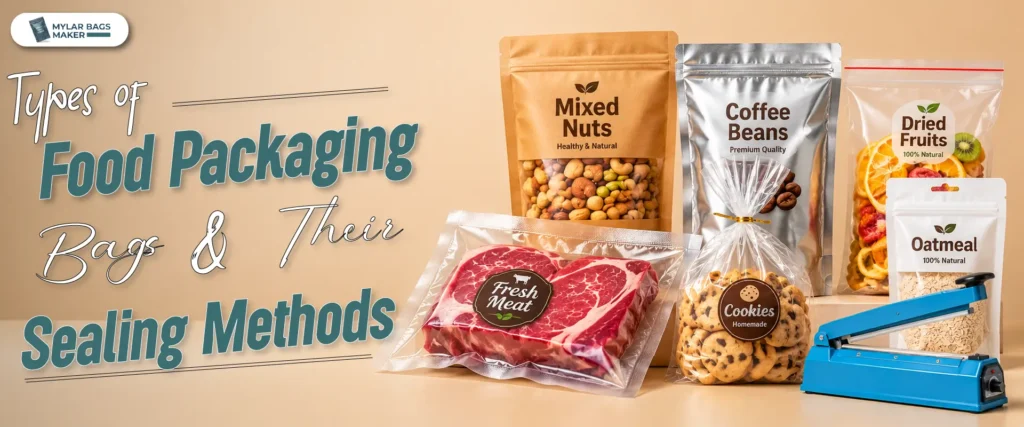
Types of Food Packaging Bags and Their Sealing Methods
The food business comes with many challenges, but the biggest one is finding the right packaging. If it is not suited to your product needs, then it can make your special product a failure. Food directly affects consumer health. If it is not well taken care of, people can easily fall sick. It leaves a very bad image of your brand in your customers ‘ minds. Besides health concerns, there are also many other factors, like food spilling and branding, etc., which your packaging should properly handle.
In this blog, you will learn about the various kinds of food packaging and their uses. You will get to know what kind of packaging is suitable for your specific food products. This guide has a complete breakdown of the basic food packaging used across the UK food industry. Discover different sealing methods, so you can pick the right one for your food products easily. Let’s dive in!
Common Types Of Food Packaging Bags
There are multiple types of food packaging bags used in the food industry. Honestly, the list gets too long to finish. But this guide covers the types that are most commonly used for food packaging bags. These bags are classified by their structure and how people use them. They provide different types of display, storage, and sealing. The most common food packaging bags are;
- 3-side seal pouches
- Stand-up pouches
- Flat pouches
- Side gusset bags
- Spout pouches
- Retort pouches
- Zipper bags
- Vacuum bags
- Fin seal pouches
Stand-Up Pouches
A stand-up pouch has a gusset at the bottom to make it stand on the shelf. People tend to recognize products more easily when they are in a standing position rather than flat. These pouches are commonly used for products like;
- Coffee
- Tea
- Snacks
- Pet treats
- Protein powder
- Dried fruits
- Candy
- Ketchup, etc.
These bags are tightly heat-sealed after filling the products. Customers tear off the seal before using it.
Side Gusset Bags
Side gusset bags have panels on their sides. They have a gusset at the bottom too. The purpose of these side gussets is to increase the storage capacity and branding space. These bags are made for carrying bulky products. They do not break easily and provide a lot of printing space for branding. These bags can store the following products.
- Grain
- Coffee
- Flour
- Bakery ingredients, etc.
These bags can be sealed based on the type, such as heat sealing. Corner sealing, back sealing, etc.
Flat Bottom Pouches
Flat bottom pouches have a rectangular flat base. These bags also have panels on the front, back, and sides. These pouches are best for branding because they have multiple sides for printing. Moreover, they stand stable on the shelf while carrying heavy products. Mostly used for bulky dry products like kibble, coffee, and rice, etc. Just like the above-mentioned packaging bags, they are also mostly heat-sealed.
3-Side Seal Bags
One of the most flexible food packaging types is the 3-side seal bag. It has three sealed edges with one open side. It is left open for filling and sealed after the product is added. This format is commonly used for products like;
- Spices
- Coffee sample
- Tea
- Dried fruits
- Small packs for snacks, etc.
These bags are also usually heat-sealed after the product is filled.
Vacuum Bags
First, the bag is filled with product, then the air is completely removed. Lastly, it is heat-sealed. Some films that are used for making these bags are shrinkable too. After the vacuum packaging is done, these bags are passed through hot water. The hot water makes the film shrink around the product tightly. This packaging is suitable for;
- Meat
- Cheese
- Seafood, etc.
Retort Pouches
For shelf-stable foods that are thermally processed at high temperatures after sealing, retort pouches are made. These pouches either have 3-side seals or side gussets. They are also made of multiple layers of PE or foil for high barrier protection. They protect your food from spoilage and outside factors that can ruin its quality. These bags are used for ready-made food like;
- Rice
- Soups
- Chicken
- Wet pet foods, etc.
These bags need firm sealings that can withstand the high temperature of thermal processing.
Spout Pouches
These kinds of pouches are used for food products that are liquids or semi-liquids. They are called spout pouches because the film of the pouch is sealed around a molded plastic spout. They also have a cap for repeated opening and closing. This means this pouch has two types of closures. One is heat sealing attached to the plastic spout, and the other is the cap. Food products that use spout pouches for their packaging are;
- Ketchup
- Mayonnaise
- Fruit puree
Zipper Bags
Zipper bags have zippers that are used for repeated openings. The zippers are added for the convenience of the customers. Moreover, they can increase the customer’s interaction with your brand. Every time people use the packaging, they see your brand and remember it for a long time. These zippers have a heat seal right above the zippers. The seal is torn off before the zippers are used.
Different Ways Of Sealing Food Packaging Bags
Yes, the heat sealing is a very important factor in food packaging, but it is not the only way. There are different kinds of sealing for food packaging. All of them serve a different role, and they have their own significance. The type of seal is selected on the basis of your product’s needs.
- Impulse sealing
Impulse sealing is done only during the sealing process. It does not stay continuously hot. During this process, the sealing bars are pressed on the pouch, and the electrical elements warm the area that is sealed.
It is suitable for small batches and sample production.
- Continuous band sealing
In this process, the filled pouches move along the conveyor. The heated bands press the seals constantly on the top of the pouches. This method is used for snack and dried fruit etc. packaging. The temperature and speed of the machinery must be controlled because otherwise it can ruin the sealing.
These are great for high-speed production
- Vacuum sealing
It is done before heat sealing. All the air is removed from the packaging, and then it is heat sealed.
This is done for meat, cheese, and other sensitive food products.
- Clip sealing
Some food packages have a metal or plastic clip at their ends. Like chub packaging for meat or pet foods. They have ends that are usually closed with metal or plastic clips.
These are done for specialized sealing.
- Hot bar heat sealing
It is one of the most common methods of food packaging sealing. In this method, two heated jaws press the packaging film together. The controlled temperature, pressure, and time make the inner layers soft.
It is suitable for stand-up pouches, 3-side seal bags, etc.
Key Advantages Of Food Packaging Sealing
There are endless benefits of food packaging sealing. They play a huge role in the quality protection of your food products. Some of the key benefits are;
- Prevention of food contamination
- Increase in lifespan
- Protection of freshness and flavour
- Protection of the smell
- Protection during delivery
The Bottom Line
Hope you understand the most common types of food packaging, their sealing methods, and advantages by now. In this blog, we learned that you cannot declare one kind of packaging as the best one. The practicality of both the sealing and bags depends on the requirements of your products. These bags are specifically designed to increase the lifespan and quality protection of your products.
Before you select the sealing method, match it with the food packaging bags and product type. Consumer needs also play a huge role in the selection process. A reliable packaging only works if the sealing is done right. Visit Mylarbagsmaker UK for high-quality custom food packaging at affordable rates.